
DNA and RNA Purification Kits and Reagents
MasterPure Gram Positive DNA Purification Kit
Purify genomic DNA from challenging Gram-positive bacteria for a wide variety of molecular biology applications.
Ready-Lyse Lysozyme Solution a ready-to-use solution supplied in quantities of 4 or 10 × 106 units.
Expert Recommendation: For difficult to lyse bacteria, Ready-Lyse Lysozyme Solution can be an additional lysis step when paired with our QuickExtract™ DNA Extraction Solution or MasterPure™ Gram Positive DNA Purification Kit, to help extract PCR-ready DNA from gram +/- bacteria or fungi. Both QuickExtract and MasterPure can be used alone or with Ready-Lyse Lysozyme Solution.
Ready-Lyse Lysozyme Solution is a stabilised lysozyme preparation for the lysis of Gram-negative bacteria such as E. coli, as well as Gram-positive bacteria such as Bacillus sp.
Ready-Lyse Lysozyme Solution is a stabilised lysozyme preparation for general bacterial lysis of Gram-positive or Gram-negative bacteria. Ready-Lyse’s specific activity is over 200 times higher than the commonly used egg-white lysozyme. This improves bacterial lysis and uses less enzyme, virtually eliminating losses due to nonspecific binding in nucleic acid purifications.
Complete digestion should occur within 15 minutes at room temperature. Following lysis, the lysate can be treated according to standard protocols for the purification of nucleic acids or proteins.
For difficult to lyse bacteria, Ready-Lyse Lysozyme Solution can be an additional lysis step when paired with our QuickExtract™ DNA Extraction Solution or MasterPure™ Gram Positive DNA Purification Kit, for DNA extraction. QuickExtract is formulated for bacterial DNA extractions, making it an optimal solution for DNA extraction from gram +/- bacteria, and our MasterPure Kit provides all of the reagents necessary to purify DNA from Gram-positive bacteria. Both QuickExtract and MasterPure can be used alone or with Ready-Lyse Lysozyme Solution.
The process is simple. Just add Ready-Lyse and QuickExtract to a bacteria sample and incubate at room temperature for 15 minutes. To kill remaining viable bacteria, the samples can be heated to 80 °C for 2 minutes.
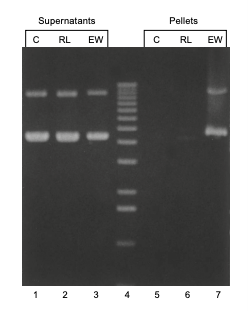
Figure 1. Decreased loss of DNA with Ready-Lyse Lysozyme Solution compared to egg-white lysozyme.
pHC79 cosmid DNA (500 μg/mL) was incubated for 15 minutes at 22 °C with either 5 μg (30 KU)/mL of Ready-Lyse Lysozyme (RL), 500 μg/mL of egg-white lysozyme (EW) or no lysozyme (C) in conditions typically used for lysis of E. coli (25 mM Tris [pH 8.0], 10 mM EDTA). The solutions were then microcentrifuged for 10 minutes. The supernatants were removed and the pellets were resuspended in TE buffer containing 0.1% SDS. Supernatants (lanes 1-3) and pellets (lanes 5-7) were then analysed by electrophoresis in a 0.8% agarose gel.
The DNA extracted can be used for PCR, pulse-field gel electrophoresis (PFGE), restriction digestion, or optical mapping.
DNA and RNA Purification Kits and Reagents
Rapid Nucleic Acid Extraction Kits
QuickExtract™ DNA Extraction Solution is a fast and simple method for extracting PCR-ready genomic DNA from almost any sample for screening and genotyping application…
Unit Definition: One unit of Ready-Lyse Lysozyme produces a decrease in A 350 of 0.001 per minute at 23 °C with a 0.5 mg/mL suspension of lyophilised E. coli K802 cells in 50 mM Tris-HCl (pH 7.5).
Storage Buffer: 50% glycerol containing 50 mM Tris-HCl (pH 7.5), 0.1 M NaCl, 0.1 mM EDTA, 1 mM DTT, and 0.1% Triton® X-100.
Need some support with placing an order, setting up an account, or finding the right protocol?
Contact us| Europe, Middle East, and Africa | |
|---|---|
| UK | +44 1992 470 757 |
| Germany | +49 30 1663 54600 |
| North America, Latin America | |
| Wisconsin, USA | +1 888 575 9695 |
| Asia Pacific | |
| China | +8621-22509000 |
| Singapore | +65 6734 4800 |